
A 1942 Pasta Maker, a 1949 Herbal Shop, and a Warehouse in Truganina
In 2015, eight years into a business built on bringing other people's product into Australia, Mega International Foods installed a factory.
The company's own account of it is unfussy. It wanted to broaden the range, fresh bakery was the gap, so it put in a small manufacturing operation and started producing subcontinental bakery lines here rather than shipping them. Mega credits the quality of the result with a quick lift in customer confidence. That is an unusual move for an importer. Importing and manufacturing are different businesses with different capital requirements, different risk profiles and entirely different ways of going wrong. A company that takes on the second while still running the first is telling you something about its appetite.
The rest of the history reads the same way. Mega International Foods began in 2007, the work of two friends dealing in Middle Eastern brands, roasted nuts and dried fruit. By 2011 the focus had shifted decisively to halal food distribution in Australia, with imports coming out of Pakistan, Lebanon and the UAE. By 2020 the company describes itself as the largest distributor of Pakistani products in the country, holding exclusive Australian rights to 21 premium brands. Which sounds impressive in the abstract. It becomes considerably more interesting once you look at who those brands actually are.
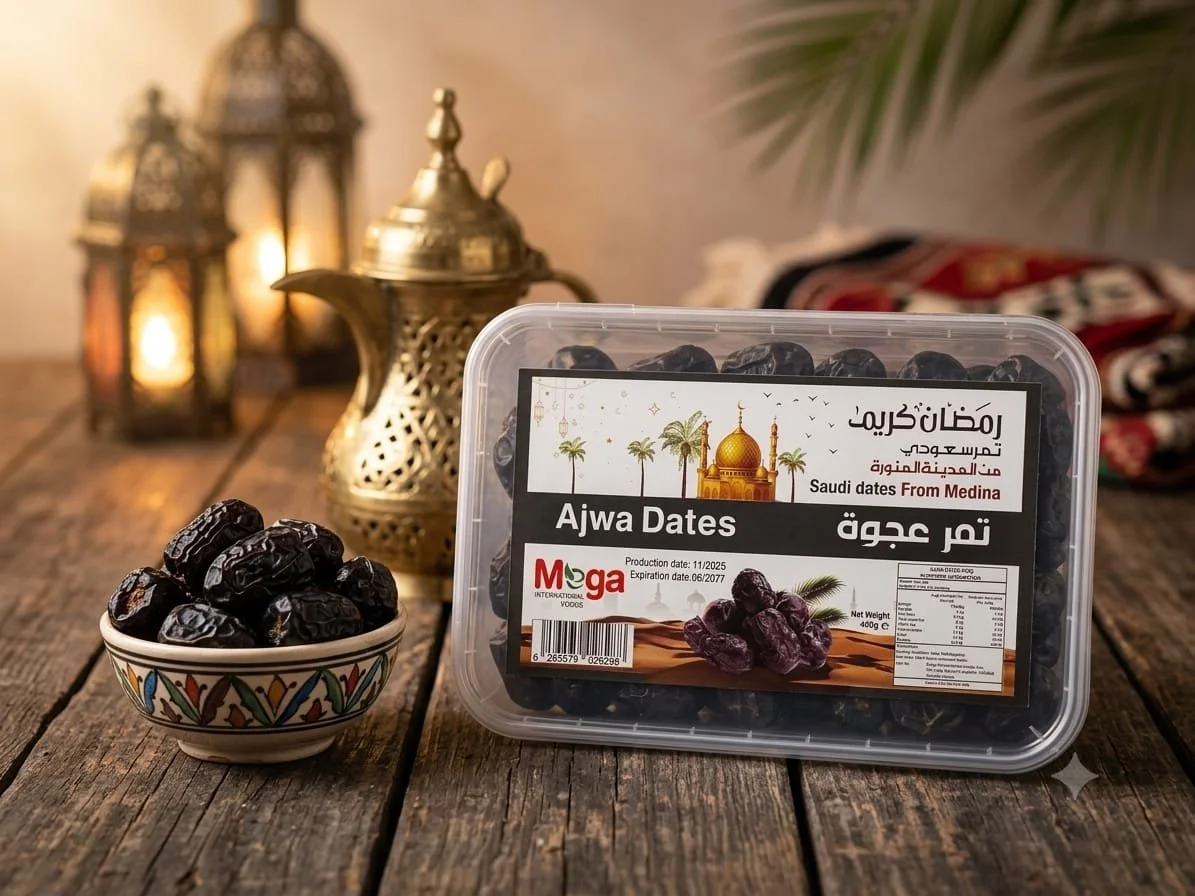
Mega International Foods - Ajwa Dates
Start with National Foods, the spine of the range. It was founded in Karachi in 1970 as a spice company and is now listed on the Pakistan Stock Exchange, running around 250 products across a dozen categories from three manufacturing facilities, the largest of them in Faisalabad. It exports to more than forty countries and holds subsidiaries in the UAE, the UK and Canada. In 1988 it became a certified vendor to McCormick, the American spice giant, which is not a status handed out casually and says a good deal about the manufacturing discipline behind the packet. On Mega's shelf the brand spans plain spices, recipe mixes, pickles and pastes, sauces and desserts. It is, in effect, a complete cooking system for a cuisine.
Then there's Shezan, which is older still.
Shezan International was incorporated in Lahore in 1964 by Chaudhry Shah Nawaz, sits inside the Shahnawaz Group and is likewise publicly traded in Pakistan. Its flagship is Shezan Mango, a juice drink of the kind that anchors childhoods, and the company says it grows its own fruit in Pakistani orchards rather than buying in imported pulp. The range runs through juices, jams, ketchups and pickles. For an Australian buyer the relevant point is that this is not a small artisanal supplier with a fragile supply chain. It is a listed food and beverage business with six decades of continuous trading behind it.
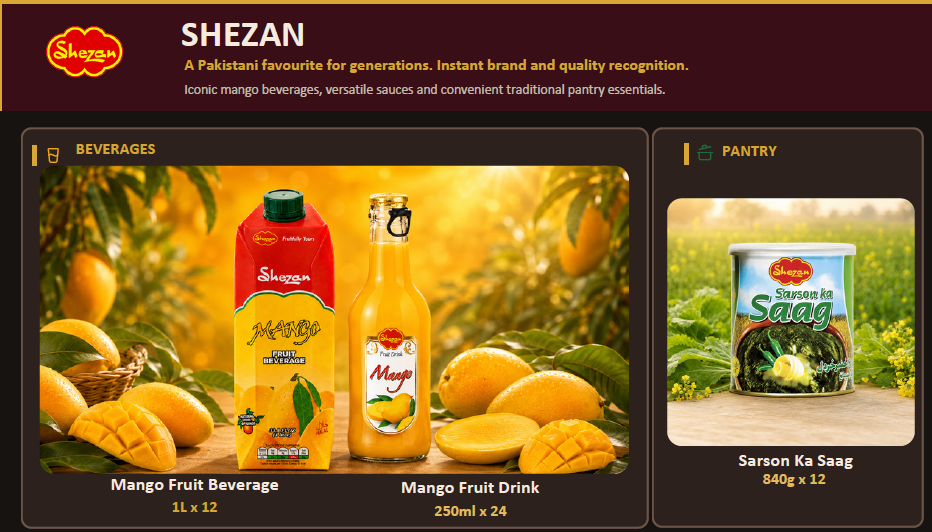
Mega International Foods - Shezan
Mega carries both Kolson and Lotte, listed on its site as separate categories. They are, in fact, the same company. Kolson was founded in 1942 as K.S. Sulemanji Esmailji and Sons, one of the first pasta makers in Pakistan, which is why the lines Mega stocks are spaghetti, macaroni spirals and vermicelli sitting alongside masala snacks and cheese balls. In 2010, South Korea's Lotte Confectionery agreed to buy a controlling stake, and the business dates the acquisition to 2011 and its rebranding as Lotte Kolson to 2014. So an eighty-year-old Karachi pasta company is now a subsidiary of one of Asia's largest conglomerates, and a Melbourne distributor holds the Australian rights to what it makes.
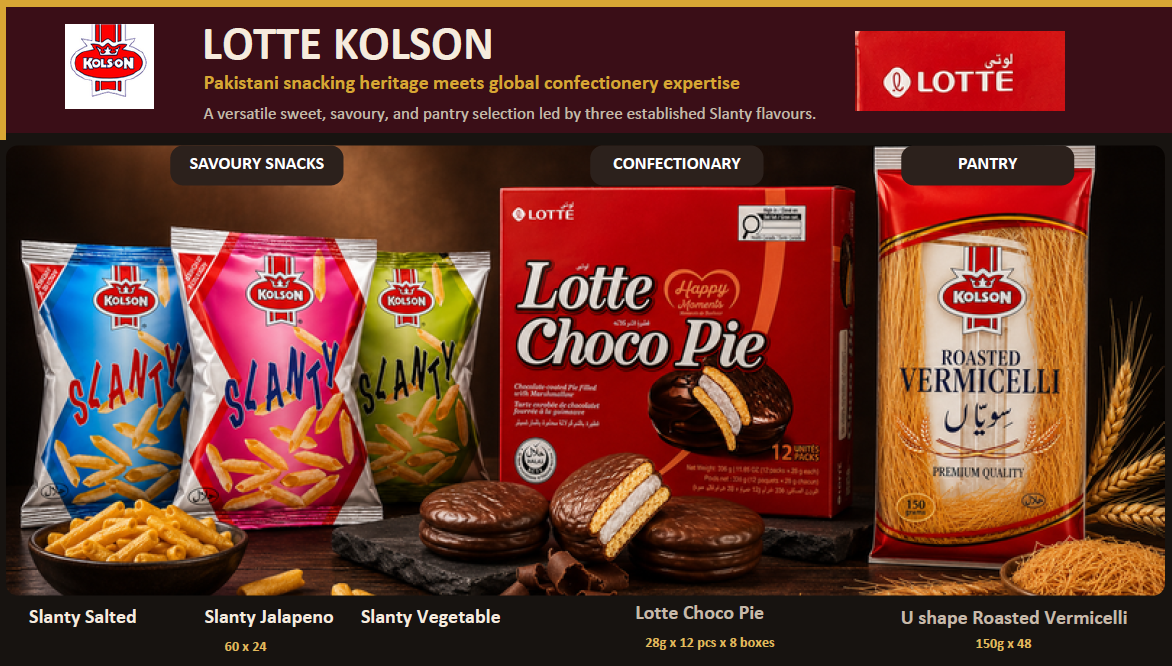
Lotte & Kolson Range
Hemani is the outlier, and probably the most commercially interesting asset in the portfolio.
It began in 1949 as a shop in Karachi's Jodia Bazaar, owned by the father of the man who runs it today. Mustafa Hemani arrived in Dubai in 1995 with six hundred dollars. The group is now headquartered there, operates seven factories in Pakistan, sells somewhere north of two thousand products and exports to more than eighty countries. What makes it unusual on Mega's shelf is category breadth: Hemani spans teas, honey, flour, rice and vermicelli, cooking essentials, drinks and sauces, then keeps going straight into henna, hair care, oils, attar and cosmetics. It pulls Mega out of the grocery aisle entirely and into personal care, which is a different buyer, a different margin structure and a different set of conversations.
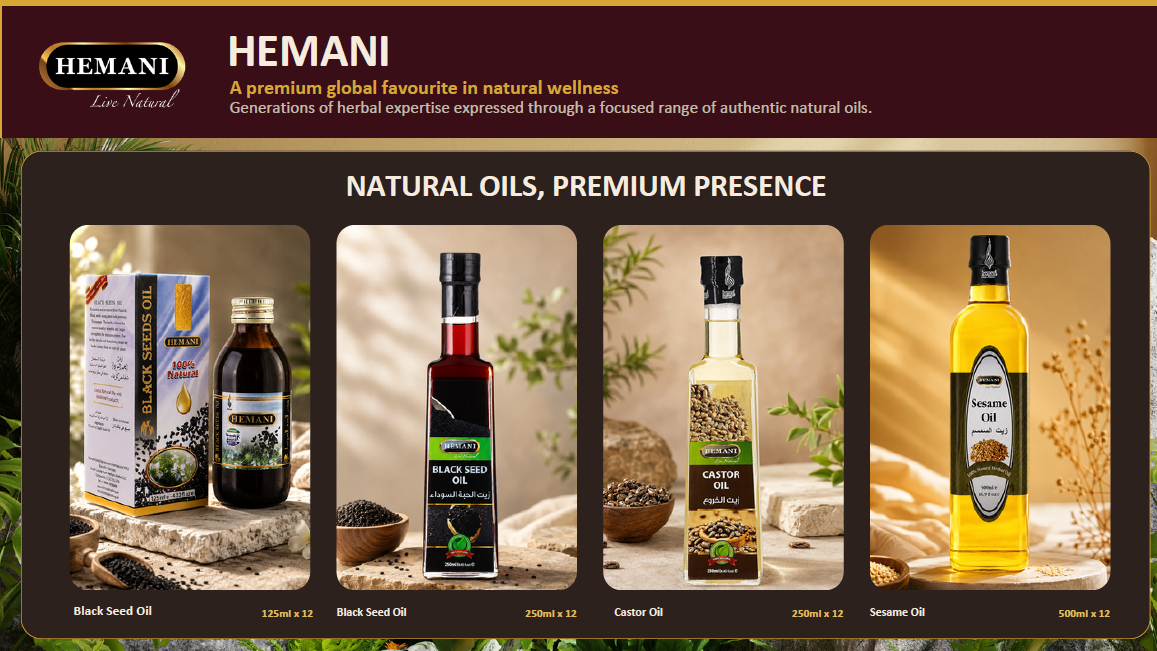
Mega International Foods - Hemani
The infrastructure behind that sits in Truganina, in Melbourne's west, with distribution sites listed at Wetherill Park, Canning Vale and Archerfield and an online trade ordering system running underneath.
None of which would matter much if the demand were theoretical. It isn't. Mega currently supplies more than 600 wholesale customers across Australia, with product moving through IGA and FoodWorks stores as well as independent supermarket groups including Marketplace Fresh and Bestway.
That last detail deserves more weight than it usually gets. A brand walking into a national range review with no trading history is asking a buyer to imagine the sell-through. A supplier with 600 accounts already turning stock can show it instead: reorder patterns, velocity by line, which products move in which postcodes and which ones don't. The independent trade has effectively spent years running the market research for free.
And the demographics behind that trade are moving quickly.
At the end of June 2024, 134,720 Pakistani-born people were living in Australia, more than double the 54,400 counted a decade earlier, making it the twelfth largest migrant community in the country. Afghan-born residents numbered 88,730, also roughly double the 2014 figure. Both groups run young, with median ages several years below the national median, which in grocery terms means household formation, growing families and rising basket sizes rather than a demographic quietly winding down.
Those are country-of-birth counts. They don't include the children born here, the broader halal shopper base, or anyone else who arrived at the category through a friend's kitchen.
In August 2026, Mega International Foods appointed MV Retail Advisory as its commercial partner to take that portfolio from the independent trade into the national chains.
"We are absolutely thrilled to be partnering with Mega International Foods," said Milun Spasov, co-founder of MV Retail Advisory. "This is a business that has spent nearly two decades building genuine depth, exclusive brands, real distribution infrastructure and a reputation with its customers that money can't buy. Our job is to translate that into the language major retailers speak, and to help take these brands to the shelf space they deserve."
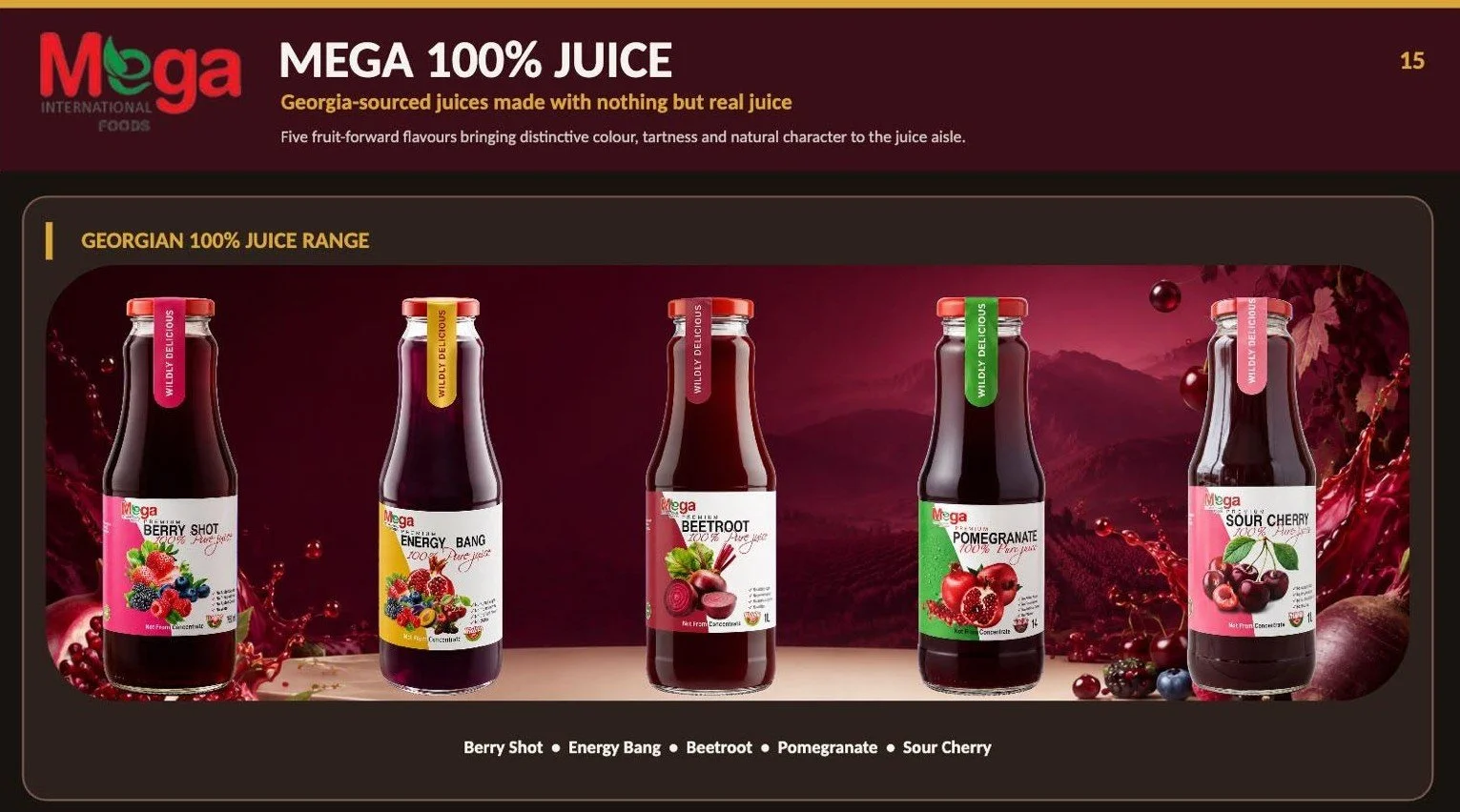
Mega International Premium Juices
The breadth is the commercial argument, and the trading history is the proof. Six hundred wholesale accounts and a presence across IGA, FoodWorks and the independent supermarket groups answers the demand question before it gets asked. What remains is the institutional one, which is a different exam entirely: forecasting accuracy, supply reliability, promotional planning, margin architecture and flawless execution across hundreds of stores rather than hundreds of accounts. Mega arrives with enough depth to build a destination fixture across ambient grocery, snacking, beverages, frozen and personal care, letting a category manager solve an entire shopper mission through a single supplier relationship, backed by manufacturers with export track records measured in decades and distribution already positioned in four states. Range of that kind is not a complication to be managed. It is leverage, and very few suppliers have it.
MVRA's role is the commercial architecture around it. Category strategy, buyer engagement, pricing and margin structure, and outsourced account management are what determine whether a first listing becomes a durable ranging position rather than a single-season trial. The firm's guide for brands entering the Australian retail market puts the principle plainly: product quality gets you the meeting, commercial readiness gets you the shelf. Its team came out of senior buying, planning and sourcing roles inside major Australian retailers, so the preparation happens from the buyer's side of the table rather than the supplier's.
Mega sorted the product question a long time ago. Some of it was sorted in 1942.
If you're weighing up a similar move into national retail, MVRA's retail readiness checklist is a practical starting point, or you can get in touch directly.
