

Fine Food Australia 2026: Five Takeouts for Food Brands Chasing Australian Retail
Eighteen thousand people walked Fine Food Australia 2026. Most of the brands exhibiting will get nothing out of it, not because the product was weak, but because a stand is not a route to market. Here is what we took away.
A 1942 Pasta Maker, a 1949 Herbal Shop, and a Warehouse in Truganina
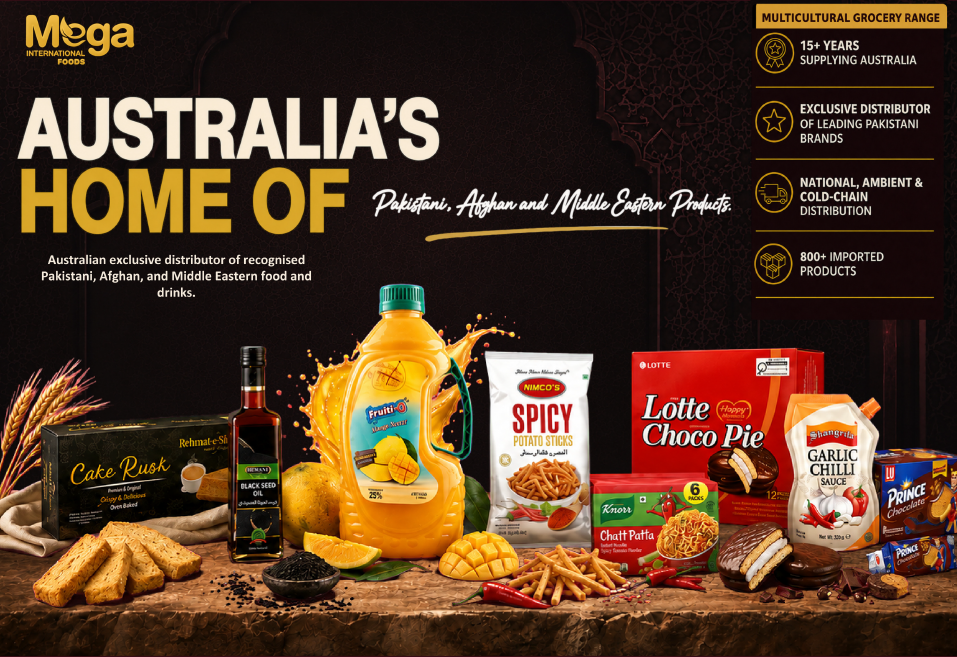
A Karachi pasta maker founded in 1942. A herbal shop opened in Jodia Bazaar in 1949. A spice company that has been certified to supply McCormick since 1988. All of them now run through one warehouse in Melbourne's west, and all of them are heading for the main grocery aisle.

Live Your Own Life, Enjoy Yourself. Now Sell to Shopping Centres.
LYOLEY is an acronym before it's anything else: live your own life, enjoy yourself. The more literal version is a modular wall frame system that clicks together in seconds, at home or in a shopping centre, and it's just found a new commercial partner in MV Retail Advisory to help it get there faster.

He Played Pro Ball In Singapore. Now He's Selling Gin There.
A former professional basketballer, an Eltham copper still, and a plan to grow across five fronts at once. Naught Gin's international expansion, and the thinking behind it, in one story.

$32 Tax Per Bottle: Why Australian Distillers Are Looking Overseas
Spirits excise in Australia has risen again, and beer got a freeze that spirits didn't. Here's what that means for retail prices, and why more distillers are building export plans instead of waiting it out.

TGA Compliance Is Now a Retail Ranging Filter
The TGA's new compliance principles aren't just a legal update. For supplement and skincare brands, they've quietly become part of the pharmacy buyer's ranging checklist.
The Listing Isn't the Win. Managing the Buyer Relationship Is.
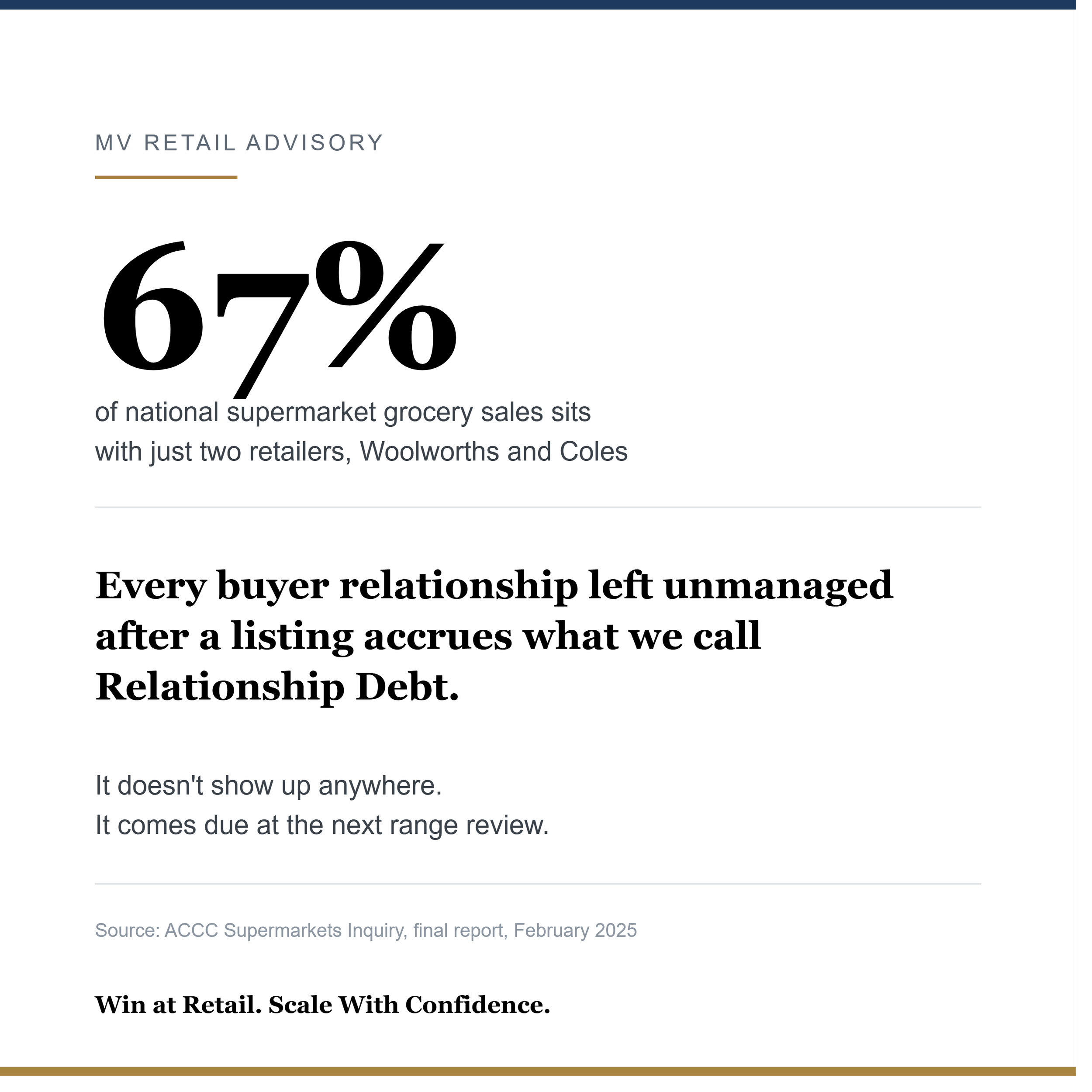
Getting listed is the easy part. What separates brands that last on shelf from brands that quietly disappear at the next range review is what happens in between.

Australia's New Supermarket Pricing Laws Take Effect 1 July. The Story for FMCG Brands Isn't the One in the Headlines.
The world's first supermarket price gouging laws land on 1 July. Every headline is about shoppers. Here's the story FMCG brand founders and commercial leaders actually need to read.
Why International Brands Lose Momentum in Australia After Launch, Not Before It
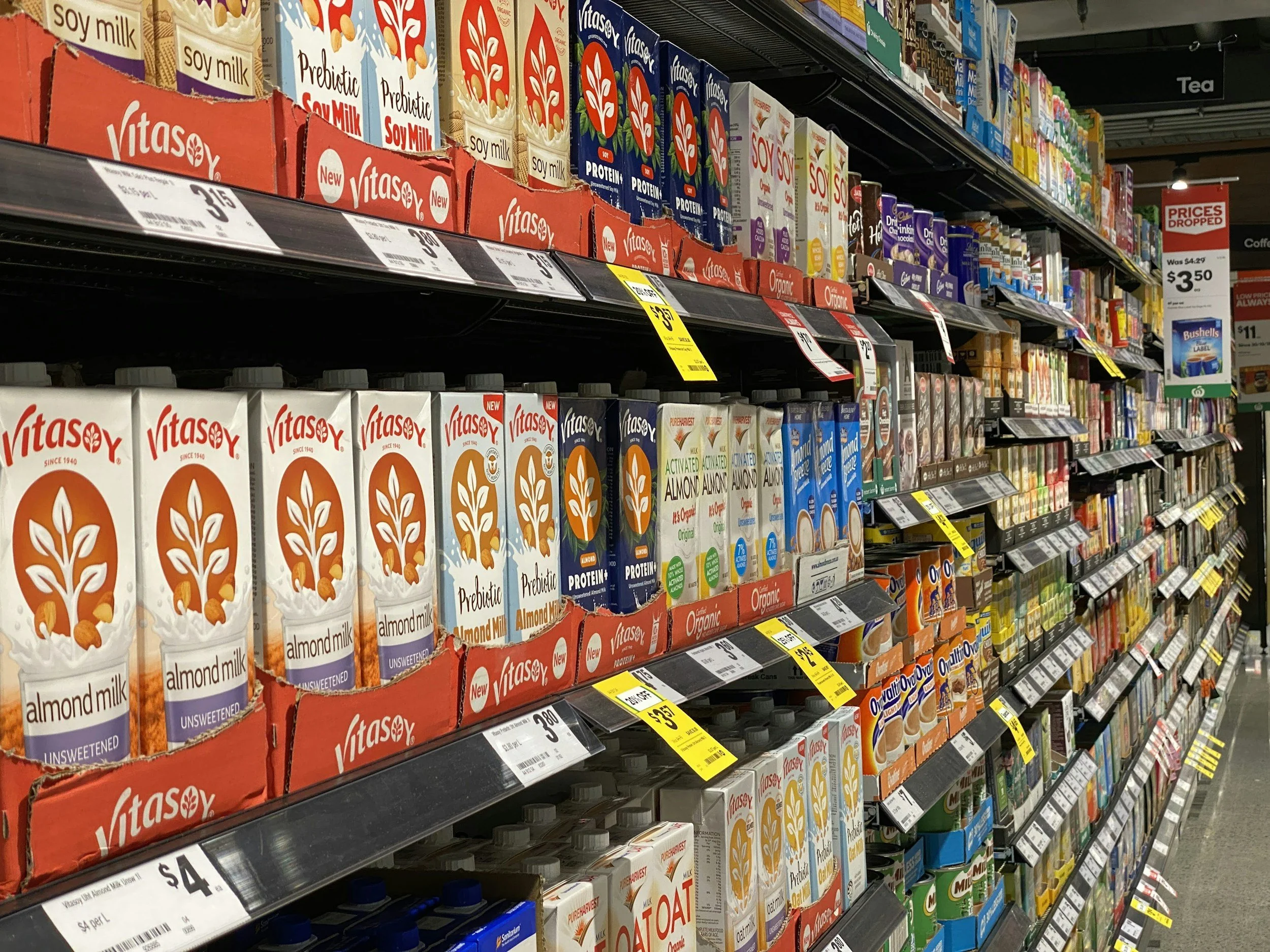
Most international brands that fail in Australia don't fail at entry. They fail in month four, when the local launch team has gone quiet and nobody can explain why sell-through has stalled. Getting on shelf was never the hard part. Staying there is.
Promotional Pricing Strategy: Why FMCG Suppliers Need Proof, Not Just Discounts
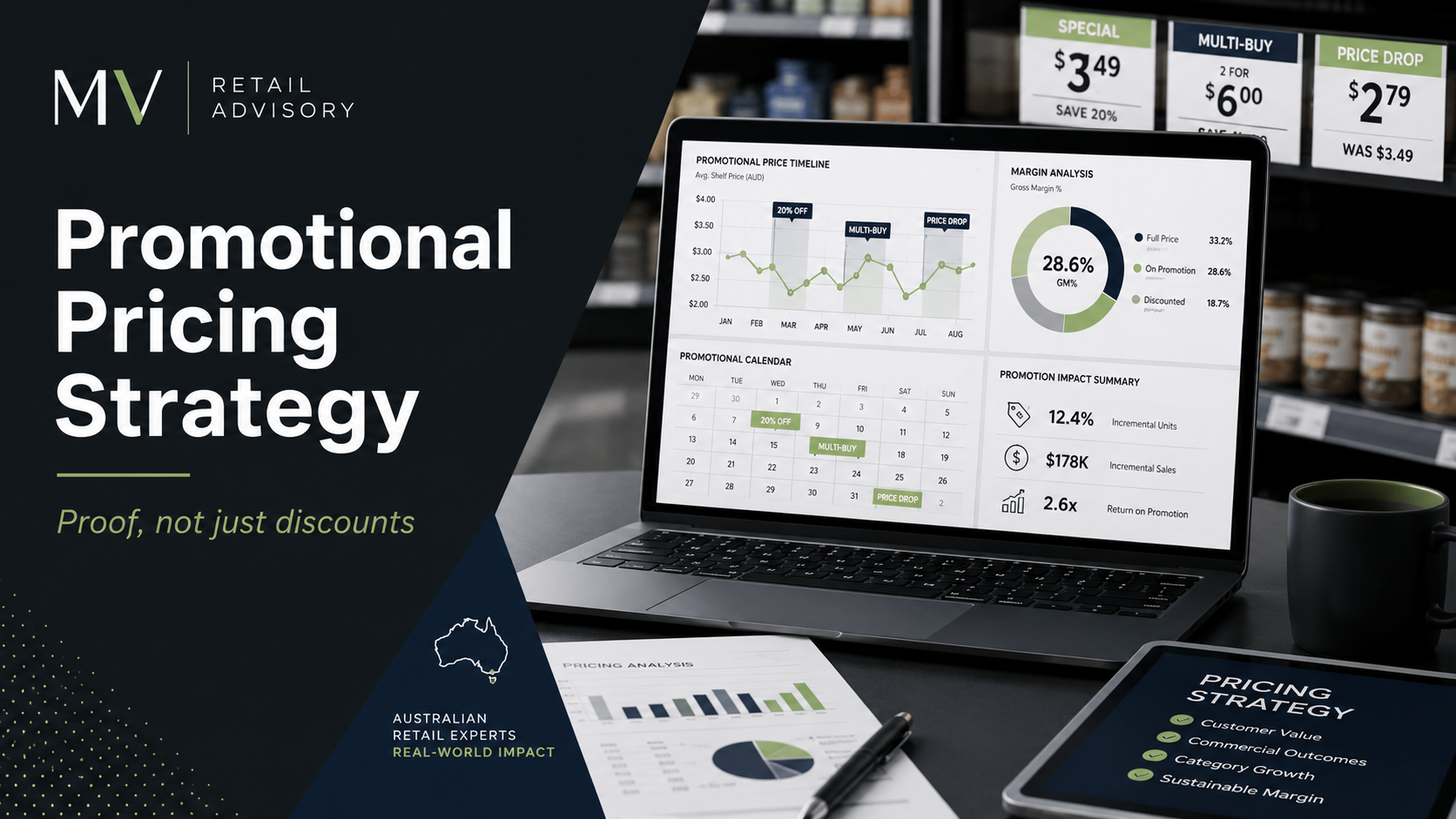
Promotional pricing in Australian grocery is now a trust, margin and compliance issue. After the ACCC’s Coles “Down Down” ruling, FMCG suppliers need clear proof behind every discount, including base-price history, funding mechanics, margin impact and shopper value.

Supermarket Trade Terms Explained: A Plain-English Guide for Australian Suppliers
A plain-English guide to the trading terms, rebates and fees Australian supermarkets negotiate with suppliers, and what they mean for your margin.

Retail Readiness 101: Is Your Brand Actually Ready for National Distribution?
Transitioning from a niche player to a national staple in Coles, Woolworths, or Kmart requires more than just a great product. It demands a rigorous assessment of supply chain resilience, margin protection, and compliance. This guide explores the "Retail Readiness" framework, focusing on the commercial realities of the Australian FMCG landscape.

How to Get Your Product Into Coles and Woolworths: The Complete Guide for Australian Brands
Getting your product into Coles or Woolworths takes more than a great product. It takes commercial readiness. This guide covers what buyers actually evaluate, how the ranging process works step by step, and the five things that kill most applications before they reach a decision.

Entering the Australian Retail Market: A Guide for International Brands
Australian retail is not a simple extension of the UK, US or European market. Here is what you need to know before approaching Coles, Woolworths, Chemist Warehouse or Priceline.

Beyond the Shelf: How to Win in "Agentic Commerce" (Where AI Shops for the Consumer).
Agentic commerce is fundamentally shifting the Australian retail landscape. As AI agents move from simple chatbots to sophisticated decision-making tools for both consumers and category managers, the traditional path to purchase is being bypassed. For emerging Australian consumer brands, winning in this environment requires more than just high-quality products; it demands absolute data integrity and a proactive approach to algorithmic visibility. This article explores the "Data Trust Gap", a critical failure point where brands lose retail listings not due to poor sales, but because their digital footprint fails to meet the predictive requirements of retailer algorithms. By implementing the Algorithmic Integrity Framework, founders can ensure their brands remain visible and "selectable" in a world where AI filters the noise. We examine the impact of retail media, smart loyalty data from Coles and Woolworths, and the increasing regulatory scrutiny from the ACCC on supermarket pricing algorithms. Learn how to optimise your commercial strategy for the age of automated replenishment and AI-assisted discovery.
DTC to Major Retail: How to Know When Your Brand is Ready to Scale
Transitioning from a nimble Direct-to-Consumer (DTC) model to the high-stakes environment of major Australian retailers like Coles, Woolworths, or Chemist Warehouse is the ultimate growth lever. However, the "shelf-ready" threshold is higher than most founders realize. This article breaks down the commercial realities of retail scaling, from margin protection and omnichannel supply chain integration to the rigorous "range review" criteria used by category managers. Learn the five non-negotiable signals that prove your brand is ready to move from Instagram feeds to national aisles.
ACCC 2026 Supermarket Laws & The Chocolate Price Crisis
Starting July 1, 2026, the ACCC will enforce strict new "excessive pricing" regulations targeting Australia’s retail giants. Using the recent 73% surge in chocolate prices as a case study, this article explores how brands must justify their margins through cost transparency or face penalties of up to $10 million.

Retail Readiness: Are You Truly Ready for National Distribution?
Many brands mistakenly view a "Yes" from a national retailer as the finish line, when it is actually the start of a complex, high-stakes operational challenge. This article breaks down the commercial, logistical, and promotional requirements brands must satisfy before approaching major buyers. We explore why ranging does not guarantee profit and how to build a robust foundation for sustainable growth in the Australian grocery and retail landscape.

How to Pitch to Retail Buyers: 10 Insider Secrets from Former Category Managers
The Death of the "Product-First" Pitch
In the high-stakes corridors of Australian retail (where shelf space at Coles, Woolworths, or Kmart is measured in basis points rather than centimeters), the most common mistake suppliers make is leading with their product.
To a Senior Category Manager (CM), your product is not a "revolutionary innovation" or a "passion project." It is a financial instrument. Their mandate is a clinical pursuit of the Profitability vs. Volume Paradox: driving top-line sales without eroding the bottom line.
One of the most effective ways to break a negotiation deadlock (particularly against aggressive international competition), is to pivot from price to channel exclusivity. We’ve seen this strategy transform a stalling negotiation with a global tech giant into a landmark win. By securing exclusivity within a specific channel, the retailer moved away from the "race to the bottom" on price matching. The result? A 5% Year-on-Year increase in profitability and a significant boost in sales volume.
To win in this environment, you must stop pitching a SKU and start pitching a Category Moat. You aren't just selling an item; you are selling a strategy to de-risk the retailer’s portfolio and capture a "white space" your competitors haven't even seen yet.
The Insider Secret: If your pitch doesn’t solve a CM’s specific Year-on-Year KPI hurdle, you aren't a partner, you’re just another line item waiting to be deleted.

MV Retail Advisory Launches to Help Retailers Navigate a New Era of Growth
Launching in March 2026, MV Retail Advisory has been founded by leading retail pioneers to help retailers and consumer brands navigate structural change, sharpen competitiveness and unlock sustainable growth. The firm combines deep operational expertise with practical, execution-focused strategy to support businesses as they adapt to rising costs, digital acceleration and evolving customer expectations.