
Fine Food Australia 2026: Five Takeouts for Food Brands Chasing Australian Retail
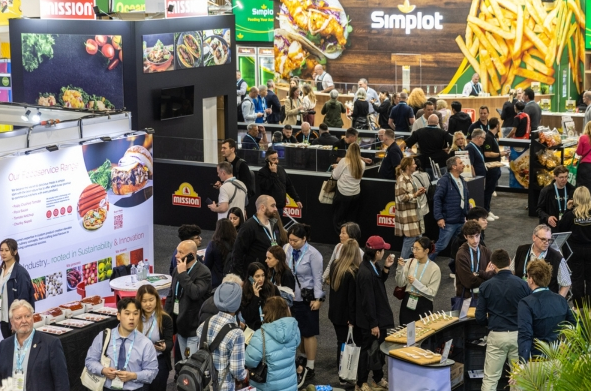
Fine Food Australia 2026 closed at the Melbourne Convention and Exhibition Centre on 3 September after four days, with more than 18,000 visitors through the doors and over 900 exhibitors from more than 30 countries on the floor, according to the post-show wrap published by Food & Beverage Industry News. For a food or beverage business trying to reach Australian buyers, that hall is the densest concentration of route to market in the country. Most of the brands standing in it will get nothing out of it.
Not because the product was weak. A lot of it was superb.
I spent two of those days walking the aisles, and the pattern was hard to miss. The best conversations were almost never at the big glossy stands. They were at the small ones, run by manufacturers who had flown in with a suitcase of samples, a family business behind them and genuinely excellent product, and who had no real idea how an Australian buyer actually arrives at a ranging decision. They had the hard part solved. They were missing the part that looks easy from the outside and isn't.
So here is what we took away, and what we think brands should do with it before the follow-up emails go cold.
Five takeouts from four days on the floor
1. This is no longer a chefs' show. It is a retail pipeline.
Fine Food still reads as foodservice from the outside, and the competition program reinforces it. The Great Aussie Pie Competition alone judged 1,821 pies, with Orange Spot Bakery from South Australia taking Grand Champion. But look at who is actually walking the aisles. The organisers list buyers and procurement, distributors, retailers, wholesale, and import and export alongside chefs and venue operators, across ten product zones.
That mix matters commercially. A specialty importer, an independent grocery group and a national distributor can all be in front of your product inside the same hour, and none of them need a national grocery listing to write you a meaningful first order. We have said before that the pathway into Australian retail rarely starts at Coles head office, and four days in Melbourne made that case better than any deck could.
2. The international supply is here. The Australian commercial architecture is not.
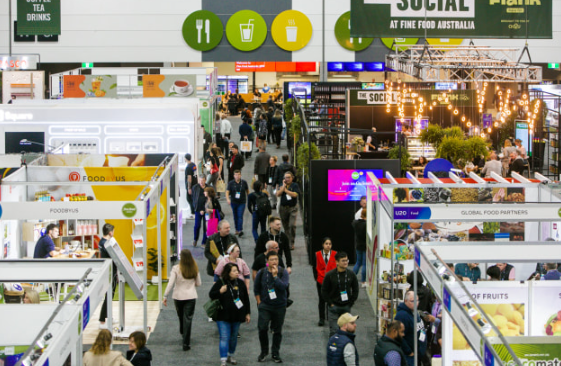
Thirty countries on the floor, with the USA as official Country Partner and expanded Taste of Australia pavilions from New South Wales, South Australia, Tasmania and Queensland. Plenty of supply.
What was almost entirely absent was any coherent answer to the Australian commercial question. Landed cost against a retailer's target margin. Trade spend and co-op terms. Promotional depth and frequency. Case configuration, shelf-ready packaging, barcode and labelling compliance, minimum order quantities, and who carries the working capital across a 60 to 90 day payment cycle. Those are the questions a category manager asks in the second meeting, not the first, and a brand that cannot answer them loses the momentum it built at the show. That failure mode is so common we wrote a whole piece on why international brands lose momentum in Australia after launch rather than before it, and if you are exhibiting from offshore, the market entry guide for international brands is the more useful read before you book a stand again.
3. Automation stopped being a novelty and became a line item.
The show's Innovation Award went to GRILL X, an autonomous AI grilling system from Beyond Honeycomb. Four education stages ran 70 presentations across 43 speakers, and technology was not a side track on any of them.
Here is the part suppliers keep missing. When a venue or a retailer automates, it is doing so to take cost out of serving each unit. That reprices everything you sell them. Complexity you used to get away with, odd case sizes, slow-moving SKUs, hand-finished merchandising, becomes a cost the buyer can now see and quantify. Cost to serve is quietly becoming the ranging filter, which is exactly the territory our buying, planning and pricing architecture work sits in.
4. Provenance is being sold as a commercial asset, and the timing is right.
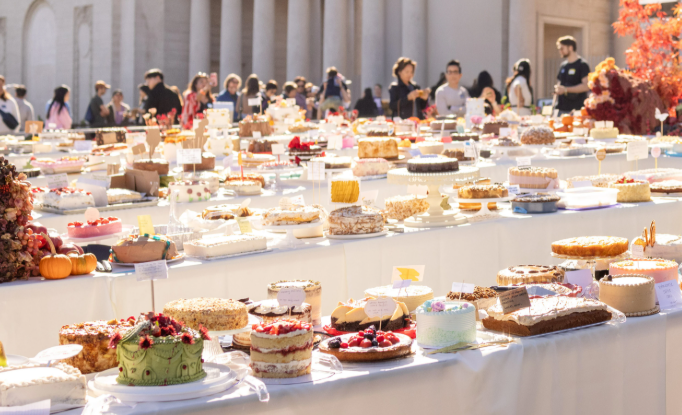
The state pavilions were not decoration. They were the most commercially serious part of the floor, because provenance is one of the few levers a smaller producer has that a private label program cannot copy quickly.
It also lands in a tightening market. ABARES forecasts the value of Australian agricultural, fisheries and forestry exports at $79.3 billion in 2026-27, with agricultural exports down about $7 billion on the prior year as drier conditions bite. When volume tightens, price and story carry more of the load. Producers who can evidence origin, certification and traceability will hold margin. Those selling on volume alone will not.
5. The handshake is not the listing.
This is the one worth printing out.
Australian retail is not in a generous mood. KPMG's Retail Health Index, reported by Inside Retail on 8 September 2026, fell to -1.07 from -0.37 the previous quarter, with 254 retail insolvencies in the quarter and consumer sentiment down 11.4 per cent. Spending is still there, and the ABS Monthly Household Spending Indicator for July 2026 has household spending up 7.0 per cent year on year with hotels, cafes and restaurants up 1.1 per cent for the month, but it is value-driven and promotion-driven spending. Buyers are ranging accordingly.
Then there is compliance, which quietly kills more imported launches than any buyer ever does. In February 2026 alone, 31 lines of imported food failed inspection under the department's Imported Food Inspection Scheme, most commonly for aflatoxin in nut products, with further failures for salmonella, pesticide residues, excess histamine and non-permitted additives. A failed consignment does not just cost you the stock. It costs you the buyer.
We met a number of international manufacturers in Melbourne whose product we would be proud to put in front of Australian retailers, and we intend to. Some of them will need a landed cost model rebuilt before they are ready. Some need labelling and compliance sorted. Most need someone on the ground here who can hold the buyer relationship year round, which is precisely what outsourced account management exists to do. If you exhibited and you are now staring at a stack of business cards wondering which ones are real, start with the Retail Readiness Checklist and be honest about the score.
Fine Food returns to ICC Sydney from 6 to 9 September 2027. Twelve months is enough time to turn a good product into a rangeable one. It is not enough time to start in June.
FAQ
Q: When and where was Fine Food Australia 2026 held?
A: 31 August to 3 September 2026 at the Melbourne Convention and Exhibition Centre. The show alternates between Melbourne and Sydney, and returns to ICC Sydney from 6 to 9 September 2027.
Q: Is Fine Food Australia worth it for a brand chasing retail, not foodservice?
A: Yes, provided you treat it as a lead source rather than a sales channel. Distributors, importers, independent grocery groups and retail buyers all walk the floor. The show will get you in front of them. What happens in the six weeks afterwards is what decides whether anything comes of it, and that is the part most exhibitors underinvest in.
Q: What do Australian buyers ask international suppliers that catches them out?
A: Landed cost against their margin target, trade spend, case configuration and shelf-ready packaging, labelling and country of origin compliance, minimum order quantities, and payment terms. Product quality is assumed. Commercial structure is what gets tested.
Q: How long does it realistically take to go from a trade show meeting to a listing?
A: Six to eighteen months in most categories, because you are working to the retailer's range review calendar, not your own. Pharmacy, independent grocery, specialty and foodservice channels move considerably faster than the major chains, which is why we usually sequence those first.
Q: Does MVRA represent international brands directly?
A: Yes. We act as the local commercial team for offshore manufacturers, covering market entry strategy, buyer negotiation and ongoing account management, so a brand does not have to stand up an Australian office to get started.
If you exhibited at Fine Food, met us on the floor, or are weighing up whether Australia is worth the freight, book a strategy call and bring your cost sheet. That conversation is more useful than another expo stand.
About the Author: Milun Spasov is Managing Partner of MV Retail Advisory. He has spent more than 25 years in senior commercial and category roles across Officeworks, BCF, Sigma and Bunnings, covering revenue, sourcing, private label and profitability. He and co-founder Victor Simonovich bring 50 years of combined retail leadership experience to brands entering and scaling in the Australian market.
