
What Trump’s tariff means for Aussies
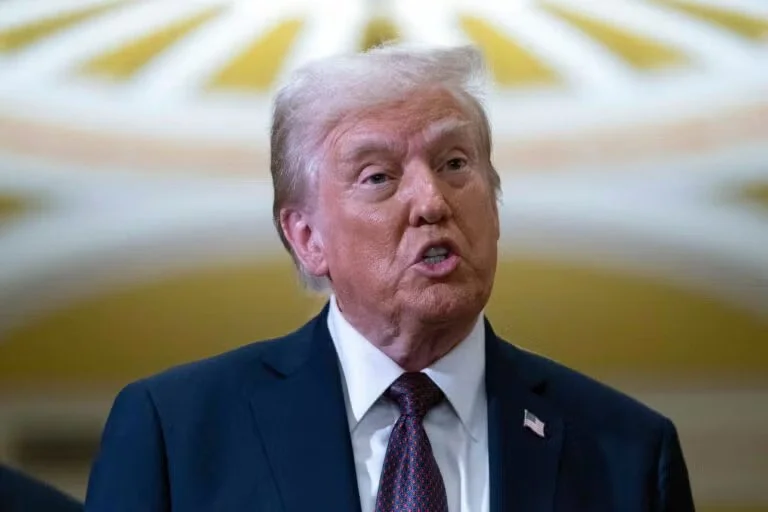
Source: whyy.org (AP Foto/Jose Luis Magana)
Australian exporters are bracing for a potential 15 per cent tariff from US President Donald Trump, as Canberra concedes there is confusion over whether the higher rate will actually take effect.
After the Supreme Court of the United States struck down Mr Trump’s sweeping “Liberation Day” tariffs last week, ruling they were unlawfully imposed under the International Emergency Economic Powers Act (IEEPA), the President responded by introducing a new 10 per cent import levy on all trading partners using powers under the Trade Act. A day later, he signalled via social media that he intended to lift the global tariff to 15 per cent.
However, the Albanese government has noted that no executive order has yet been signed to enact the higher rate. Trade Minister Don Farrell said there was “a little bit of confusion” around the announcement, pointing out that the formal order currently stipulates a 10 per cent tariff. Any move to 15 per cent could occur as early as Tuesday AEDT.
If implemented, the increase would add a further 5 per cent to the baseline 10 per cent tariff applied to Australian goods in April 2025. While some nations previously hit with steeper levies under IEEPA — including Brazil and Canada — would effectively see reduced rates under the new framework, Australia would lose the modest competitive advantage it gained from its relatively lower tariff setting.
The United States accounts for about 4 per cent of Australia’s total goods exports, according to research by the Australian Industry Group. However, certain sectors are far more exposed. The US takes 39 per cent of Australia’s manufactured metal exports, while chemical and machinery producers also send more than one-fifth of their shipments to American buyers.
Australian Industry Group chief executive Innes Willox said the renewed tariff threat would affect businesses much like the original announcement did earlier this year.
“Some will get an immediate advantage, others will miss out, depending on how they trade and who they compete with,” Mr Willox said. “But one experience will be universal — dealing with the uncertainty, which is cruelling investment, delaying purchasing decisions and creating unnecessary red tape.”
Australian lamb exporters are also vulnerable, with the US their largest market. Unlike beef — which secured a tariff exemption in November — sheep and goat meat would face the additional 5 per cent impost if the higher rate is confirmed. Meat & Livestock Australia managing director Michael Crowley said it remained unclear how much of the tariff would be absorbed by US supply chains versus passed on to consumers.
“For American consumers it’s an unforeseen cost impacting grocery prices,” Mr Crowley said, noting global demand for Australian red meat remains strong.
Mr Farrell said Australia would raise the issue with US trade officials, including Trade Representative Jamieson Greer, and at an upcoming meeting of the World Trade Organization. He argued the tariffs were inconsistent with the spirit of the two nations’ trade agreement and broader alliance.
Despite the uncertainty, the Australian sharemarket showed resilience. The S&P/ASX 200 slipped just 0.7 per cent on Monday afternoon — roughly 1 per cent below last week’s record high — a stark contrast to the 15 per cent plunge seen after the original tariff announcement in April 2025.
Shane Oliver, chief economist at AMP Limited, said markets appeared to be betting the threat may not fully materialise, referencing investor acronyms such as “Trump Always Chickens Out”.
“Australia doesn’t export a lot to the US anyway — it didn’t harm us significantly last year,” Mr Oliver said, adding that most studies suggest the bulk of tariff costs are borne by US businesses and households.
For now, the proposed 15 per cent tariff remains in legal and political limbo — leaving Australian exporters watching Washington closely.
Article Source: news.com.au | What Trump’s tariff means for Aussies