
Why the war on Iran could hit Australia harder than you think
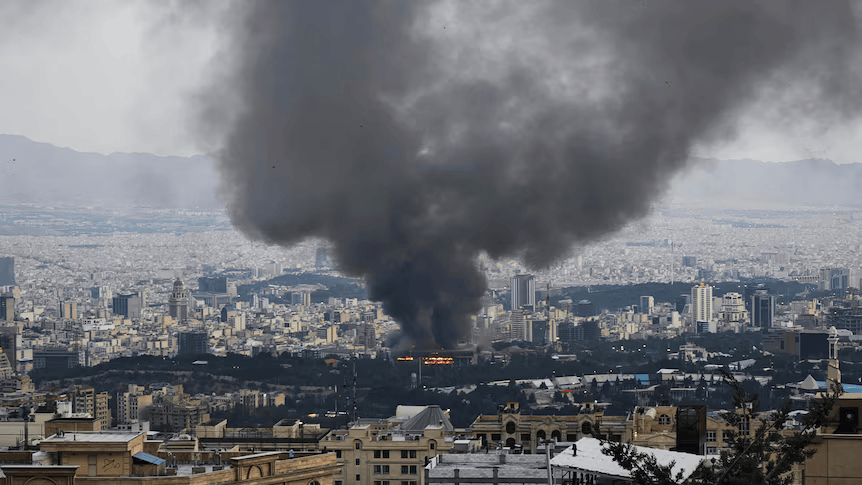
Source: www.abc.net.au | Australian embassy staff in Tehran rushed out of Iran amid fears of bigger conflict in the Middle East
It may seem harsh—even narcissistic—to ask what this attack on Iran means for Australia while bombs are still falling across the Middle East and children are dying beneath the rubble of their schools.
Yet the question must still be asked. Australia’s Prime Minister, Anthony Albanese, was among the first world leaders to publicly support the United States’ military action, stating: “We support the United States acting to prevent Iran from obtaining a nuclear weapon and to prevent Iran continuing to threaten international peace and security.”
Given this endorsement, it is important to consider what the attack could mean for Australia—not tomorrow, but in the near future.
For the record, many critics argue that this conflict represents an illegal war under international law.
Two immediate lessons stand out for Australia before the situation grows even more complex. The first concerns how the AUKUS security pact could make Australia a strategic target in future conflicts. The second is that the Prime Minister’s support for the attack raises questions about whether Australia fully appreciates how much it benefits from a rules-based international order.

The Risk of Becoming a Target
At present, Iran has reportedly targeted U.S.-aligned states in the Gulf region—including Bahrain, United Arab Emirates, Jordan, Kuwait, Iraq and Qatar—locations where American military assets are stationed. These countries did not necessarily seek this war, yet they are now potential targets because they host U.S. bases.
The lesson is clear: hosting foreign military infrastructure can draw a nation into conflicts it did not initiate.
The AUKUS agreement—announced by Australia, United States and United Kingdom—has been widely discussed for its plan to deliver nuclear-powered submarines to Australia. However, critics argue that its deeper strategic value lies in expanded U.S. military access to Australian facilities, particularly at HMAS Stirling in Western Australia.
Some analysts suggest the United States may ultimately benefit more from using Australian bases to operate its own submarines, rather than transferring large numbers of vessels to Australian control.
This raises a critical question: if Australia hosts major U.S. military infrastructure, could it become a primary target in the event of a major power conflict?
Existing joint facilities—such as Pine Gap and Naval Communication Station Harold E. Holt at North West Cape—already play key roles in intelligence and military communications. As U.S. presence and capabilities expand, those installations may become increasingly significant strategic assets.
From a geopolitical perspective, that significance may also increase the risks.

The Importance of International Law
A second issue concerns the importance of international law for countries like Australia.
Nations with the aspirations of a middle power benefit enormously from a stable rules-based international order. This system supports open trade, encourages cooperation on global challenges, and establishes norms that guide relations between states.
When international law is undermined, smaller nations can become more vulnerable to the ambitions of more powerful countries.
While the Iranian regime has long been criticized for human rights abuses and repression, critics of the current conflict argue that these realities do not automatically justify unilateral military action.
For countries like Australia, adherence to international law is not merely a moral stance—it is a strategic necessity.

The Question of War Powers
Another concern is the process by which Australia could become directly involved in such conflicts.
Under current arrangements, the decision to deploy the Australian Defence Force into international conflicts rests largely with the executive government. In practice, this means the Prime Minister and Cabinet could commit Australia to military involvement without a parliamentary vote.
Before 2001, the call-up of reserve forces required Parliament to sit within ten days. That requirement was removed from the Defence Act during the government of John Howard.
The current Defence Minister, Richard Marles, has previously stated that under Australia’s Westminster system, decisions about deploying the ADF remain an executive prerogative and that he believes the arrangement should remain unchanged.
A Call for Careful Leadership
In an increasingly volatile global environment, Australia faces complex strategic choices. Balancing alliances, national security, and adherence to international law requires careful and considered leadership.
As global tensions rise, many Australians will be watching closely to see how their government navigates these challenges—seeking a path that protects national interests while upholding the principles that underpin international stability.
Article Source: abc.net.au | What the US attack on Iran means for Australia