
Why Now Is the Best Time to Launch an Overseas Brand in Australia
If you are deciding when to launch an overseas brand in Australia, the answer in late 2026 is now. Three things are happening together. Household spending is growing at its fastest annual rate in three years. The population is adding almost 400,000 people a year. And a trade deal with the European Union will remove tariffs on nearly everything Europe sells here. Brands that enter while all three are true will set the terms. Brands that wait will have to fight for space someone else already holds.
In July, SmartCompany ran a story headlined "Global retailers are betting on Australia despite the spending slowdown." It listed Alo Yoga's first Australian store at Chatswood Chase in May, Loro Piana's debut at Westfield Sydney in February and Chow Tai Fook's first local boutique in April. It was a good story with the wrong subtitle.
The slowdown had already ended.

Retail display by Lyoley, an MVRA client
ABS data released on 27 August showed household spending rose 1.1% in July, the third monthly rise in a row. Spending was 7.0% higher than a year earlier, the strongest annual growth since June 2023. Clothing and footwear was the fastest-growing category that month at 1.6%. Those brands were not betting against the tide, they are getting ahead of the curve.
We should be clear about the other side, because any serious entry plan has to account for it. The Reserve Bank held the cash rate at 4.35% on 11 August and said inflation is "still too high" and not expected to return to the middle of its target range until late 2027. Part of that 7.0% is price, not volume. Australian shoppers are spending, but they are paying close attention to what they spend on. For an overseas brand this helps more than it hurts. A market where consumers compare hard rewards a brand with a clear reason to exist. It punishes the local incumbent that has drifted on habit and shelf position. That combination gives a newcomer an opening.
Then there is the size of the market itself. The ABS population release on 17 September put Australia at 27.9 million people. The population grew by 392,700 in the twelve months to March, and net overseas migration made up 292,100 of that. Western Australia grew fastest at 2.1%, with Victoria and Queensland at 1.6% each. Many brands still think of Australia as a small, remote market that is costly to serve. In practice it adds a city the size of Canberra every year, and a large share of those new households arrive with brands they already buy.
That point matters more than most entry plans admit. One of our clients, Mega International Foods, supplies more than 600 wholesale customers across IGA, FoodWorks and independent supermarket groups. It does so with brands from Pakistan, Lebanon and the UAE, including a pasta maker founded in 1942 and a Karachi herbal business founded in 1949. That story is worth reading in full. The route into Australia for an overseas brand does not have to start in a national supermarket head office. Often it starts where the demand already exists and builds from there.
For European brands, the timing is sharper still. Australia and the EU concluded their free trade agreement on 24 March. The European Commission says it will remove over 99% of tariffs on EU exports to Australia, saving EU exporters up to €1 billion a year in duties. Cheese, wine, chocolate, biscuits and breads are among the food categories named. The agreement still needs European Parliament approval, a Council decision and Australian ratification before it takes effect, so the tariff savings are coming but have not arrived yet.
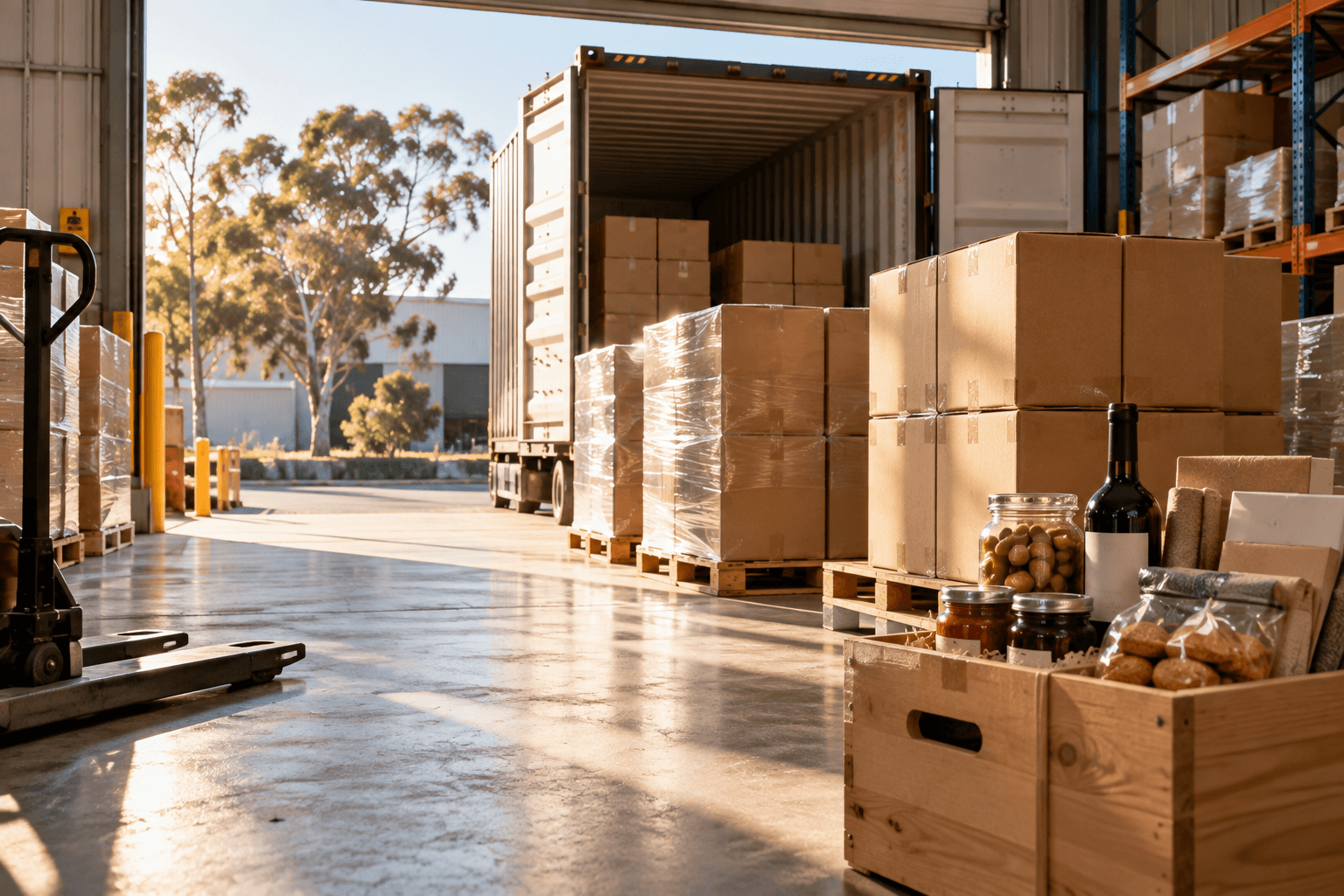
That gap is the opportunity. Retail ranges are planned well ahead of the shelf date. A European brand that opens buyer conversations after the tariffs fall will be pitching into ranges already set around the brands that moved earlier. The ratification period is the time to secure the conversation, lock in the landed-cost model and be ready when the price advantage lands.
There is one more reason to move, and it is less comfortable. Australians are already buying from overseas, with or without your involvement. Pattern's 2026 Marketplace Consumer Report found Amazon reaches 60% of Australian shoppers. It also found Temu turned over A$2.6 billion here in the last financial year. If your brand has no proper presence in Australia, someone else is probably setting your price on a marketplace listing you do not control. Launching properly is partly about growth. It is also about getting your brand back.
Where most launches actually go wrong
The hard part is not getting in. We wrote about this in June: international brands usually lose momentum after launch, not before it. A brand wins a listing, celebrates, and then finds nobody in the market to run the account. Nobody is there to attend the range review, fix a supply issue on a Tuesday afternoon Sydney time or answer the buyer's question before a competitor does. Australian buyers work with people they can reach, and a head office eleven time zones away is hard to reach.

That is the gap MV Retail Advisory was built to fill. It is work we have done across a broader set of categories than most people expect: food and beverage, health foods and supplements, medicinals, technology and consumables, furniture and stationery. We have also spent a large part of our careers across the table from businesses in China, Japan, Korea, the United States and the European Union. That breadth matters because every entry looks different. A Japanese stationery maker faces different questions in Australia than a US supplement brand, and neither looks much like a European food exporter working out its landed cost before the tariffs fall. A good entry plan starts from those differences rather than a template.
Before any introduction, we assess whether the product suits the Australian market. That covers compliance with TGA or FSANZ requirements where they apply, price points against the local set, pack formats and which channel makes sense first. Then we make the introductions to the right buyers, whether that is a national chain, a pharmacy group, an independent grocery network, an office and technology retailer or a specialty store. We negotiate the contract and trade terms so the margin holds up after the first promotion. After that we stay on as the brand's local presence and representation, which is the part most launches lack. Our full retail market entry and account management services sit behind that, run by founders with more than 50 years of combined experience inside Coles, Woolworths, Bunnings, Officeworks, BCF, Sigma, Target Australia and Priceline. You can read more about our backgrounds here.
The window will not stay open forever. Spending cycles turn, the brands already arriving will take the best shelf and centre locations, and the EU tariff advantage will be priced in within a few years. The overseas brands that do best in Australia will be the ones that prepared this year. Our Retail Readiness Checklist is a practical place to start, and our guide for international brands entering the Australian retail market covers the mechanics in more depth.
FAQ
Q: Is Australia too small a market for an overseas brand to bother with?
A: No. It has 27.9 million people and added almost 400,000 in the year to March 2026. It is also a common test market for the wider Asia-Pacific region.
Q: Do I need an Australian entity or local team before approaching retailers?
A: Not on day one. You do need someone in the market who can deal with buyers, attend range reviews and fix problems in local business hours. A local commercial partner can do this while you decide whether a permanent team is worth the cost.
Q: When does the EU–Australia free trade agreement start?
A: Negotiations concluded in March 2026. The agreement takes effect once the European Parliament, the Council and Australia complete their approval processes. No confirmed start date has been published yet.
Q: Which categories and markets does MV Retail Advisory work with?
A: Food and beverage, health foods and supplements, medicinals, technology and consumables, furniture and stationery. We work with businesses from China, Japan, Korea, the United States and the European Union.
Q: Should I start with a major supermarket or a smaller channel?
A: It depends on the category. A supplement brand might start in pharmacy or health food stores, and an ethnic food brand in independent grocery. Fashion and lifestyle brands have mostly led with shopping centre flagships and online. Going straight to a national chain can work, but only if your supply chain, pricing and marketing support can handle national volume from the first order. Proving demand in a channel suited to the product usually gives you a much stronger case when you get to the national buyer.
If you are weighing an Australian launch, book a strategy call and we will tell you plainly whether the market suits your product, where to start and what it will take.
About the Author: Milun Spasov is Co-Founder and Managing Partner of MV Retail Advisory. He has more than 25 years of senior commercial, sourcing and private label experience across Officeworks, BCF, Sigma and Bunnings. Read more about MVRA's founders.
